Courses and Certificate in Yoga Philosophy
Yoga Philosophy Certificate: Core Courses
The Yoga Philosophy continuing education program offers a number of online short courses that provide a foundational introduction to the spiritual and philosophic traditions that inform yoga, and is designed to enrich one's own yoga practice or even advance one's career as a teacher.
Yoga Philosophy Certificate Requirements
Classical Yoga isn't a religion— it's a universal system of spiritual and metaphysical inquiry into consciousness itself. It shares roots with the Vedic wisdom of Hinduism, and its deepest values echo through Buddhism and Jainism alike, pointing beyond any single tradition toward the nature of being.
Upon successful completion, students will be able to:
- Understand yoga's history and cultural roots with the rigor of a research university, not a weekend course
- Teach from the source and be guided by scholars who've made careers of researching and studying
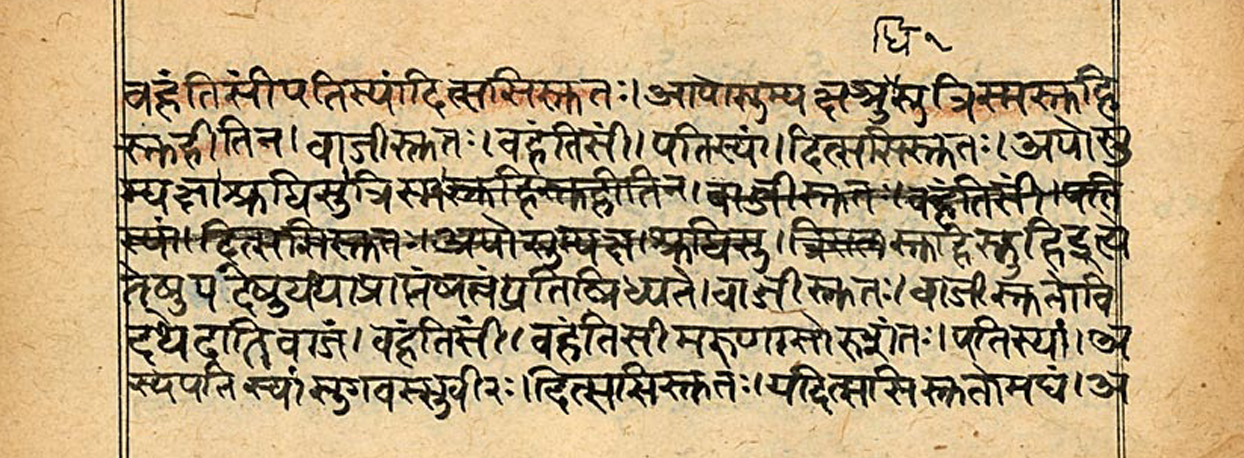
- Engage the root texts in their original Sanskrit for depth; few programs offer
Certificate Requirements
Students complete 12.0 semester hours total: the required core courses plus 5.0 semester hours of elective coursework selected from advanced studies in yoga philosophy, contemplative practice, and integrative wellness.
Yoga Philosophy Core Classes
Core Classes Include:
- Yoga Sūtra (20 hours)
- Bhagavad Gītā (10 hours)
- Sāṃkhya Kārikā (10 hours)
- Upaniṣads (10 hours)
These core courses are required for the Yoga Philosophy Certificate and the 200-hour teacher training
-
Yoga Sūtras of Patañjali
The Yoga Sūtras of Patañjali is perhaps the seminal work on the meaning and purpose of yoga. The study of this text is not simply an academic curiosity, but a vital means of deepening self-understanding and transforming consciousness. In this seminar, we will explore essential teachings from all four chapters through lecture, dialogue, and integrated practices such as chanting and meditation.
All sessions will be recorded and shared for those unable to attend live.
Yoga Sūtra of Patañjali — Fall 2026
Dates: October 4, 2026 – November 22, 2026
Times: 10:30 a.m. – 1:00 p.m. PST
Format: Online (live and asynchronous access available)
Instructor: Dana Tarasavage
Total Hours: 20
Credit: 2 unitsSingle Course Fee: $596
Notes: Scheduled around Thanksgiving weekend (Nov 28–29); no class those dates. -
Bhagavad Gītā
The Bhagavad Gītā encapsulates the primary elements of traditional yoga practice and theory. Set on the field of dharma, the text opens with the warrior Arjuna seeking guidance from his charioteer, Lord Kṛṣṇa. Through Arjuna’s outer conflict, his deeper inner struggle is revealed, leading to teachings on Yoga as both a path of inward realization and a guide for right action in the world.
We will read the full text in English translation, chant select verses and examine key Sanskrit passages to illuminate the Gita’s enduring wisdom on truth, duty, and the search for meaning. Open to all, especially yoga practitioners and teachers.
All sessions will be recorded and shared for those unable to attend live.
Bhagavad Gītā — Spring 2027
Dates: January 10, 2027 – January 31, 2027
Times: 10:30 a.m. – 1:00 p.m. PST
Format: Online (live and asynchronous access available)
Instructor: Dana Tarasavage
Total Hours: 10
Credit: 1 unitIndividual Course Fee: $298
-
Sāṁkhya Kārikā
The Sāṁkhya Kārikā of Īśvarakṛṣṇa is the foundational text of the Sāṁkhya system, one of the six darśanas of Hindu philosophy. Through seventy-two concise verses, it presents a sophisticated metaphysical framework that informs the Bhagavad Gītā, Yoga Sūtra, Haṭha Yoga, Tantra, and Kashmir Śaivism.
In this course, we will explore the core principles of Sāṁkhya, including puruṣa (pure consciousness), prakṛti (material nature), the tattvas (principles), and the dynamics of the guṇas, toward understanding the path to kaivalya (liberation).
All sessions will be recorded and shared for those unable to attend live.
Sāṃkhya Kārikā — Spring 2027
Dates: February 7, 2027 – February 28, 2027
Times: 10:30 a.m. – 1:00 p.m. PST
Format: Online (live and asynchronous access available)
Instructor: Dana Tarasavage
Total Hours: 10
Credit: 1 unitIndividual Course Fee: $298
-
Upaniṣads
The Upaniṣads present the profound philosophical insights of India’s early sages, expressed through intimate dialogues and stories. They illuminate the essential identity between Ātman (the individual Self) and Brahman (the Absolute Reality).
In this course, we will examine foundational texts including the Bṛhadāraṇyaka Upaniṣad and Kaṭha Upaniṣad, exploring Sanskrit passages and central themes such as non-dualism, the unity of Self and Absolute, and the ongoing relevance of these teachings.
All sessions will be recorded and shared for those unable to attend live.
Upaniṣads — Spring 2027
Dates: March 14, 2027 – April 11, 2027
Times: 10:30 a.m. – 1:00 p.m. PST
Format: Online (live and asynchronous access available)
Instructor: Dana Tarasavage
Total Hours: 10
Credit: 1 unit
Notes: No class March 28 (spring break)Individual Course Fee: $298
-
Sanskrit 1
In Sanskrit 1, we integrate traditional Indian and Western methods to provide an interactive experience of learning Sanskrit.
This course is ideal for beginners and those with some experience who would like to reinvigorate their studies. We focus on pronunciation and learning through sound, as well as reading, writing, and a little grammar using chapters from Yogāvatāraṇam: The Translation of Yoga.
Joining theory with practice, this course is taught through video lectures, audio, and written material, with weekly assignments to help you learn at home.
Dates: SPRING 2027 DATES TBD VISIT OCHS WEBSITE for UPDATES
Times: Synchronous zoom sessions
Format: On-demand video and zoom sessions
Instructor: Dr. Zoë SlatoffPayment made to OCHS
-
Sanskrit 2
Sanskrit 2 builds upon our Sanskrit 1 course. We further develop our understanding through grammar and by chanting and translating verses from yoga-related texts.
We will study chapters 3 and 4 of Yogāvatāraṇam: The Translation of Yoga. This integrates traditional Indian and Western academic methods of learning.
Over nine weeks we learn masculine, feminine, and neuter nouns in all of their eight cases as well as more verbs and sandhi rules. This allows us to read from texts such as the Bhagavad Gita, Hathapradipika, the Sivasamhita, and popular mantras.
Dates: July 26 – September 19, 2026
This course contains four dedicated live Zoom sessions with Dr Zoë Slatoff
Format: On-demand video and zoom sessions
Instructor: Dr. Zoë Slatoff
Electives
Students choose from a range of online electives to complete the certificate, deepening study of yoga philosophy, contemplative traditions, Sanskrit, and applied practice.
Through these elective offerings, students tailor their learning to their interests while building a strong foundation in the philosophical, ethical, and contemplative dimensions of yoga. The certification supports both personal development and professional advancement for yoga teachers, therapists, and practitioners seeking a deeper understanding of the wisdom traditions that inform modern practice.
Price per Module: $298 per 1 credit hour
Upcoming Elective Modules
Course offerings are subject to change. Some classes may be cross-listed and offered online, in-person, or hybrid. Courses may be supplemented or replaced with comparable offerings to ensure students can complete required elective units.
Please contact yogastudies@lmu.edu with questions
-
Course Details
- Status: Registration Available
- Course Code: YMSX801
- Session: Fall 2026
- Dates: 9/12/2026 – 9/13/2026
- Times: Sat 10:00 AM–5:00 PM, Sun 9:00 AM–1:00 PM Pacific
- Instructor: Osborne, Amy
This two-day intensive equips teachers and practitioners with tools to bring trauma-informed yoga and mindfulness into their local community. Participants build a research-backed outreach proposal and practice pitching it to potential partners.
- Explore ethical foundations of outreach through Anekāntavāda (pluralism) and social justice
- Identify strategic partnerships with specific populations and organizations
- Develop a full professional service proposal, including offerings and rate structures
- Practice delivering a professional "pitch call" to sector leaders
Instructor Bio
Amy Osborne, M.A., E-RYT, has spent a decade studying the physiology of mindfulness and Yoga tradition through research, teaching, and community outreach. Through her organization, In Yoga Collective, she develops trauma-informed programs for schools, nonprofits, and healthcare centers. -
Module 2: Yoga, Mindfulness, and Social Justice
Using a framework of Yoga and mindfulness traditions, the Yoga Mindfulness and Social Change series explores the relationship among contemplative traditions, social change, and social justice, emphasizing a transformative, social-justice lens.
Dates: October 10, 2026 – October 31, 2026
Times: 10:00 a.m. – 12:30 p.m. PST
Format: Online (live and asynchronous access available)
Instructor: Judith Carlisle, PhD, MA, YACEP
Total Hours: 10
Credit: 1 unit
Individual Course Fee: $298Counts toward the 50-hour YMSX Certificate, or individually as an elective toward the 5 credits of the Yoga Philosophy Certificate
Using a framework of Yoga and mindfulness traditions, the Yoga Mindfulness and Social Change series explores the relationship between contemplative traditions, social change, and social justice, emphasizing a transformative, social justice lens.
The series is offered as three 10-hour Modules, each a collection of four 2.5-hour sessions. Sessions combine guided reading discussion with practice and can be taken independently or as a full sequence.
Session 1: Yoga and Mindfulness: Colonization and Appropriation
Examines cultural appropriation and colonization within Yoga, exploring how historical, social, and economic forces shaped modern practice and what it means to engage in decolonized Yoga today.Session 2: Climate Change: Yoga, Jainism, and Ecology
Explores what the dharmic traditions offer in understanding and responding to climate change, and how they can guide sustainable action.Session 3: Gender and Yoga
Explores how gender roles have shaped, and been shaped by, Yoga and mindfulness traditions, drawing on scholars including Diana York Blaine, Punam Mehta, Cara Hagan, and Jacoby Ballard.Session 4: Body and Body Image; Yoga and Mindfulness
Examines how Yoga and mindfulness practices can broaden accessibility and inclusivity while minimizing physical and psychic harm across all bodies. -
Module 3: Yoga and Power — Spring 2027
Dates: January 16, 2027 – February 6, 2027
Times: 10:00 a.m. – 12:30 p.m. PST
Format: Online (live and asynchronous access available)
Instructor: Judith Carlisle, PhD, MA, YACEP
Total Hours: 10
Credit: 1 unit
Individual Course Fee: $298Counts toward the 50-hour YMSX Certificate, or individually as an elective toward the 5 credits of the Yoga Philosophy Certificate
This series is broken down into:
Session 1: Yoga, Power, and Appropriation
Explores models of power in Yoga and mindfulness, and how practice has historically challenged, and can continue to challenge, power structures.Session 2: Psychedelics, Substances, and Spirituality
Traces the role of "soma" and psychedelic substances in dharmic traditions, drawing on Terrence McKenna, Baba Ram Dass, and Stuart Sarbaker.Session 3: Technology, Science, Yoga, and Mindfulness
Explores consciousness, identity, and technology through a dharmic lens, examining how concepts like dharma and karma inform an increasingly technologized world.Session 4: Yoga, Whiteness, and Accessibility
Examines Yoga and mindfulness through a lens of privilege and exclusion, asking how these practices have become communities of exclusion. -
Module 4: Teaching and Living Yoga and Mindfulness — Spring 2027
Dates: March 13, 2027 – April 10, 2027
Times: 10:00 a.m. – 12:30 p.m. PST
Format: Online (live and asynchronous access available)
Instructor: Judith Carlisle, PhD, MA, YACEP
Total Hours: 10
Credit: 1 unit
Individual Course Fee: $298Counts toward the 50-hour YMSX Certificate, or individually as an elective toward the 5 credits of the Yoga Philosophy Certificate
Session 1: Yoga as Mindfulness: Commodified, Commercialized, Packaged, and Sold
Critically examines the commercialization of Yoga and mindfulness, and explores their foundational role in transcendence and liberation.Session 2: Yoga, Food, Ahimsa
Explores ahimsa and dietary choice through the Yoga Sūtras and scholars including Jonathan Dickstein, Teigha Mae Van Hester, Christopher Miller, and Sharon Suh.Session 3: Work, Service, and Inclusiveness
Explores how Yoga and mindfulness practices intersect with work environments, confronting exclusion and building communities of inclusion.Session 4: Trauma-informed Practices and Inclusivity
Explores the opportunities and challenges of trauma-informed, accessible Yoga teaching as a pursuit of wellness justice. -
Module 5: Capstone: Prison Yoga Project Meditation Certification — Spring 2027
Dates: Saturday & Sunday, May 2027 (dates TBD; final weekends following LMU graduation)
Times: TBD
Format: Onsite Practicum (in partnership with Prison Yoga Project)
Instructor: Shaun McNally, M.A., E-RYT 500, Yoga Educator & Holistic Healing Specialist
Total Hours: 10
Credit: 1 unit
Individual Course Fee: $298Shaun McNally, M.A., E-RYT 500, Yoga Educator & Holistic Healing Specialist, leads the capstone Prison Yoga Project Meditation Certification, in partnership with Prison Yoga Project (prisonyogaandmeditation.org).
The certificate concludes with specialized training for bringing mindfulness and yoga into correctional settings. This 10-hour intensive equips graduates with the skills needed to facilitate meditation and yoga programs within prisons and other justice-impacted communities, through practicum and simulation. Upon completion, graduates receive the Prison Yoga Project certification to teach yoga in prisons.
Completion of all five components earns the YMSX Certificate and qualifies graduates to teach yoga and meditation in correctional and justice-impacted settings through the Prison Yoga Project. Background checks and protocol training are provided; entry is not guaranteed without full vetting of the individual prior to prison entry acceptance.
Prison Yoga + Meditation is a 501(c)(3) composed of dedicated volunteers who believe in our mission of healing.
-
A short course exploring Āyurveda as a science of consciousness, centered on dinacharya (daily routine) and lifestyle practice, with an integrative look at asana suited to individual constitution.
Course Format
- Dates: One weekend in March 2027
- Times: Saturday 9-5 & Sunday 2-5
- Format: Online (live and asynchronous access available)
- Instructor: Erin Rusler E-RYT® 500, YACEP®, M.A. YOGA, M.S. Ayurveda & Integrative Medicine
- Total Hours: 10
- Credit: 1 unit
Learning Outcomes
Upon completion, students will be able to:- Understand Āyurveda as a consciousness-based system rooted in puruṣa (awareness) and prakṛti (nature)
- Identify the three guṇas (sattva, rajas, tamas) and the doshas (vāta, pitta, kapha) as expressions of consciousness through Yoga Metaphysics
- Design and personalize a dinacharya (daily routine) to support balance and sattva
- Recognize their own constitution (prakṛti) and current imbalance (vikṛti)
- Select a few foundational asanas suited to each dosha as part of an integrated lifestyle practice
- Bring consciousness-based Āyurveda into teaching within appropriate ethical scope (non-diagnostic, non-prescriptive)
-
Meditation Fundamentals & the Bodhisattva Path
A short course introducing core meditation techniques alongside the philosophy and practice of Bodhisattva Buddhism, fulfilling Yoga Alliance's required meditation competencies (key terms, methods by lineage, guided practice, mantra/mudra) within a contemplative, compassion-centered framework.
Course Format
- Dates: April 2027
- Times: 9-5 Saturday / Sundays, 2-5
- Format: Online (live and asynchronous access available)
- Instructor: Joe Cadiff
- Total Hours: 10
- Credit: 1 unit
- This is a part of the Lion's Breath 200 HR Teacher Training and an Elective for The Philosophy Certificate (1 credit competency/ 5 needed)
Learning Outcomes
Upon completion, students will be able to:- Define and apply key meditation terminology and methods across contemplative lineages
- Practice foundational meditation techniques including breath awareness, concentration (samatha), and insight (vipassana)
- Identify and compare other widely practiced meditation styles beyond the course's core focus
- Understand the Bodhisattva ideal, bodhicitta, and the six pāramitās as a framework for practice
- Lead guided compassion-based meditations (loving-kindness, tonglen) suitable for a yoga class setting
- Integrate mantra and mudra practices into meditation instruction
Yoga comes from the Sanskrit word yuj, which means to yoke, join, or apply. Yoga is usually translated as union, for its methods and practices lead to a profound integration of body, mind, and spirit. The yogic ideal is to achieve complete freedom and authenticity by transcending the limiting structures of the ego-personality (the person we behave as on a normal day) and discovering the true spiritual Self within.
Yoga is a set of spiritual practices but in itself is not an institutionalized religion, per se. Hinduism is related to yoga through a common recognition of the Vedas as an authoritative source, and both Buddhism and Jainism share many of the core values of the yoga tradition. But Classical Yoga is best understood as a system of spiritual practice, rather than a particular religion.
Course Requirements
The Yoga Philosophy professional certificate program provides a foundational introduction to these spiritual and philosophic traditions. Students must complete a total of 12.0 semester hours in coursework to receive a certificate of completion in Yoga Philosophy .
Course and program requirements, schedules and tuition are subject to change; and additional fees may be incurred for books and materials. Click here to review all policies prior to enrollment. For additional information, contact BCLA Yoga Studies at (310) 258-8725 or YogaStudies@lmu.edu.
Please note: because this is a fully online program, enrollment eligibility is dependent on place of residency. Please review State Authorization before enrolling.