The Sāṃkhya System: Accounting for the Real
The Sāṃkhya System: Accounting for the Real
March 22 - 23, 2018
Loyola Marymount University
- Conference Videos
- Welcome & About
- Conference Schedule
- Speaker Biographies
-
What is the Ground of Manifest Procreativity (Vyakta-prakṛti)? An Existential Phenomenological Theory of Life as the Self-Manifesting of Samyoga (Compresence)
Geoff Ashton, Ph.D.
A Feminist Phenomenological Approach to the Notion of Body in Classical Sāṃkhya
Ana Funes, Ph.D.
Revisiting Sāṃkhya Kārikās 25-31: The Determinative Nature of the Guṇas
Christopher Chapple, Ph.D.
The Ontology of dukkha: Recovering Samkhya through Vyasa’s Commentary on Yoga Sutras II. 15-II.25
Urmila Patil, Ph.D.
Substance, Essence and Soteriological Practice in Sāṃkhya Philosophy
Mikel Burley, Ph.D.
The Unity of the Puruṣārthas in the Sāṅkhya Kārikā
Al Collins, Ph.D.
Kāpil Maṭh: A Contemporary Living Tradition of Sāṃkhyayoga
Marzenna Jakubczak, Ph.D.
Prakṛti in Practice: The Cases of Yoga Anand Ashram and Polestar Gardens
Christopher Miller, Ph.D. Candidate
The Yoga Studies program at Loyola Marymount University will offer a two-day conference exploring The Sāṃkhya System: Accounting for the Real
This conference will examine the Sāṃkhya system employing feminist and textual analysis as well as phenomenological and soteriological approaches.
This conference is free and open to the public.
Yoga Studies
Loyola Marymount University offers the first Master of Arts in Yoga Studies in America. Graduate students engage in deep study of Yoga philosophy and history, Sanskrit, elements of physical practice, comparative spirituality, and study of India. LMU also offers a selection of Yoga Studies certificates which are open to the public. Topics range from Yoga Therapy to YogaEd/Yoga in Schools, Mindfulness and Social Change, and Philosophy courses. Each summer master teacher Ramaswami visits campus to teach in the Krishnamacharya tradition, and twice a year the University offers 200-hour teacher trainings called Yoga and the Healing Sciences.
Learn more about Loyola Marymount University's Yoga Studies program.
Loyola Marymount University
LMU is a private Catholic university with 6,000 undergraduates, 2,200 graduate students and 1,100 law students from diverse backgrounds and many perspectives. Our seven colleges and schools boast best-in-the-nation programs in film and television, business, education and more. Our stunning campus in West Los Angeles is a sun-soaked oasis overlooking the Pacific coast and a model of sustainability. We're rooted in the heart of Los Angeles, a global capital for arts and entertainment, innovation and technology, business and entrepreneurship. Our mission is grounded in a centuries-old Jesuit educational tradition that produces extraordinary men and women dedicated to service and social justice. We're proud of more than 85,000 LMU alumni whose professional achievements are matched by a deep commitment to improving the lives of others.
The Sāṃkhya System: Accounting for the Real conference is made possible through the generosity of Navin and Pratima Doshi and supported by the Yoga Studies Programs at Loyola Marymount University.
Thursday, March 22
Malone 112
2:00 p.m. | Registration and Welcome
2:15 p.m. | What is the Ground of Manifest Procreativity (Vyakta-prakṛti)? An Existential Phenomenological Theory of Life as the Self-Manifesting of Samyoga (Compresence)
Geoff Ashton, Ph.D.
This paper represents part of a larger philosophical interpretation of the Sāṃkhya Kārikā through Jose Ortega y Gasset's existential phenomenology. It examines the question, "What is the nature of classical Sāṃkhya metaphysics?" by way of the question, "What is the ground of manifest procreativity (vyaktaprakṛti)?" It begins with a critique of realist and idealist responses to this question, focusing upon the interpretations of notable Sāṃkhya scholars, Gerald Larson and Mikel Burley, who respectively emphasize mūlaprakṛti and puruṣa as the ontological foundation of vyaktaprakṛti. The paper then argues that "samyoga" (literally, "joining with") is a dialectical compresence of mūlaprakṛti and puruṣa, and that when viewed through the lens of Ortega's existential phenomenology, samyoga gets understood as both underlying vyaktaprakṛti and manifesting as vyaktaprakṛti. Ortega's philosophy helps us to (1) recognize the ontological rootedness of vyaktaprakṛti, and (2) organize the "making manifest" (vyakta) of procreativity (prakṛti) in terms of the dialectical interplay of two distinct yet "con-joined" (sam-yoga) fundamental principles: a discrete center of consciousness (puruṣa) and an other that transcends that consciousness (mūlaprakṛti). Vyaktaprakṛti is reducible to neither a world of mind-independent entities that lie in waiting for our observation and analysis (à la external realism) nor the mental activity of a transcendental ego (à la certain forms of idealism). Rather, vyaktaprakṛti unfolds as the self-manifesting, dialogical interchange between puruṣa and mūlaprakṛti.
3:00 p.m. | A Feminist Phenomenological Approach to the notion of Body in Classical Sāṃkhya
Ana Funes, Ph.D.
This talk examines the gendered aspect of Sāṃkhyan philosophy and reveals the problematic nature of the “male gaze” as it is illustrated in various metaphors used by the tradition to refer to puruṣa (consciousness- the observer) and prakṛti (matter- the observed). This analysis has as a purpose to recover the notion of body— particularly the “subtle body”— in Sāmkhya philosophy using Merleau-Ponty’s phenomenological notion of “flesh” and Luce Irigaray’s notion of the “maternal feminine”. The phenomenological approach brings to the fore an aspect of Sāṃkhya that is usually overlooked: that the interrelation between puruṣa and prakṛti is played out in the realm of the body, of our bodies. The feminist perspective helps to show that the recognition of the feminine aspect of embodiment in Sāṃkhya can guarantee a reciprocal and reversible interaction of both principles— consciousness and matter— within the flesh.
3:45 p.m. | Break
4:00 p.m. | Revisiting Sāṃkhya Kārikās 25-31: The Determinative Nature of the Guṇas
Christopher Chapple, Ph.D.
This paper will focus on the discussion within Sāṃkhya Kārikā verses 25-32 on the function of fluctuations (vṛittis) in the world, examining the argument presented by Īśvarakṛṣṇa that the world is construed according the constitution of one’s own particular set of guṇas. A suggestion will be made that the repeated use of the number three in these verses can be seen as a reference to the guṇas, not to the threefold organ as defined later in the text (33).
4:45 p.m. | The Ontology of dukkha: Recovering Samkhya through Vyasa’s Commentary on Yoga Sutras II. 15-II.25
Urmila Patil, Ph.D.
What makes dukkha or suffering an inescapable part of the human condition? This question is at the heart of Indic philosophies in general and that of Samkhya in particular. This paper looks at how the Sāmkhyan theory of existence and suffering as laid out in the Sāṃkhya Kārika finds a strong resonance in Vyāsa’s commentary on the Yoga Sutras II. 15 – II.25. Through an in-depth textual analysis, we will explore the conceptual and linguistic strategies of Vyāsa with which he draws upon Sāṃkhya. While the affinity between Sāṃkhya and Yoga is well-known, investigating the gaze of the commentarial tradition of the Yoga Sutras upon the Sāṃkhyan thought would open up novel ways to understand this relationship.
Friday, March 23
Malone 112
9:00 a.m. | Welcome
9:15 a.m. | Substance, Essence and Soteriological Practice in Sāṃkhya Philosophy
Mikel Burley, Ph.D.
Approaching Samkhya philosophy through the concepts of substance and essence can disclose some of its central themes along with certain interpretive difficulties. To serve these purposes, this paper first provides an overview of Samkhya's importance within the Indian philosophical milieu and then examines how the terms "substance" and "essence" have been applied in interpretations of Samkhya. As will be seen, several prominent Samkhya concepts have been explicated in English-language discussions with reference to one or other, or both, of these terms. Focusing especially on the concept of tattva (which has sometimes been translated as "essence"), the latter part of the paper argues that seeking to understand this concept highlights the need to contextualize Samkhya's ontological pronouncements in relation to its professed soteriological aspirations.
10:00 a.m. | The Unity of the Puruṣārthas in the Sāṅkhya Kārikā
Al Collins, Ph.D.
The Sāṅkhya Kārikā, as Gerald Larson interprets it, presents us with an “eccentric dualism” in which one partner (prakṛti) takes up almost all the space and the other (puruṣa) virtually none—but nevertheless constitutes the aim or final cause of the action of the former, and indeed is essential to its very existence since prakṛti’s being inheres completely in its action of unfolding and manifesting itself (inpariṇāma or pravṛtti) in reference to puruṣa. This most basic fact about ourselves (and all other sentient beings in the universe—which arguably means everything) is called puruṣārtha, “for the sake of puruṣa.” Prakṛti seeks to accomplish two seemingly disparate things for puruṣa: pleasure or experience (bhoga) and release (apavarga, mokṣa, kaivalya). The aim of this paper, focusing on verse 58 of the SK, will be to show that these goals are in fact virtually (or perhaps actually) identical. In that verse, the nivṛtti (quenching) of a desire (autsukya) through action in ordinary life is said to be like (yathā/tadvad) the action of prakṛti in releasing puruṣa
10:45 a.m. | Break
11:00 a.m. | Kāpil Maṭh: A Contemporary Living Tradition of Sāṃkhyayoga
Marzenna Jakubczak, Ph.D.
In this paper I describe the phenomenon of Kāpil Maṭh in Madhupur (Jharkhand), a Sāṃkhyayoga āśrama founded in the early twentieth century by a charismatic Bengali scholar-monk Swāmi Hariharānanda Ᾱraṇya (1869–1947). While referring to Hariharānanda’s writings I will consider the idea of the re-establishment of an extinct philosophical school. I shall specify the criteria of identity of this revived Sāṃkhyayoga tradition by explaining why and on what assumptions the modern reinterpretation of this school can be perceived as continuation of Patañjali’s and Īśvarakṛṣṇa’s lineage. The starting point must be, however, the question whether it is possible at all to re-establish a philosophical tradition which had once broken down and had disappeared for centuries. In this context, one ought to ponder if it is likely to revitalize the same line of thinking, viewing, philosophy making and practice in accordance with the theoretical exposition of the right insight achieved by an accomplished teacher, a master, the founder of a ‘new’ revived tradition declared to maintain a particular school identity. Moreover, I will refer to a newly published monograph of Knut A. Jacobsen (2018) devoted to Kāpil Maṭh tradition interpreted as a product of the nineteenth-century Bengali renaissance.
11:45 a.m. | Prakṛti in Practice: The Cases of Yoga Anand Ashram and Polestar Gardens
Christopher Miller, Ph.D. Candidate
To value prakṛti or not to value prakṛti, that is the question. This paper will follow prakṛti as a category of ethnographic research through two yoga communities: Yoga Anand Ashram in Amityville, New York, and Polestar Gardens on the Big Island of Hawaii. Over the past few years I spent time researching and practicing yoga in both of these communities. As the data I collected in each shows, the Saṃkhyan category of prakṛti is just as polyvalent in practice in modern yoga communities as the yoga tradition itself. I begin with Yoga Anand Ashram and move to the Big Island of Hawaii before making some concluding observations as I compare the deployment of the term “prakṛti” in both of these communities. As I will show, modern yoga communities continue to offer varying models to approach and give meaning to our embodied experience in the world. The term prakṛti is deployed in diverse ways to describe this experience and in one way, shape or form, our relationship to manifest prakrti must be reformed.
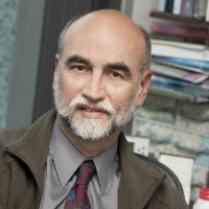
Christopher Key Chapple, Ph.D. | Doshi Professor of Indic and Comparative Theology, and Director, Master of Arts in Yoga Studies, Loyola Marymount University
A specialist in the religions of India, he has published more than twenty books, including the recently released edited and co-edited volumes, Yoga in Jainism (Routledge publishing) and Engaged Emancipation: Mind, Morals, and Make-belief in the Moksopaya/Yogavasistha. Chris serves on the advisory boards for the Forum on Religion and Ecology at Yale University, the Ahimsa Center at Cal Poly Pomona, the Centre for Jain Studies at SOAS, University of London, and the International Summer School for Jain Studies in Delhi.
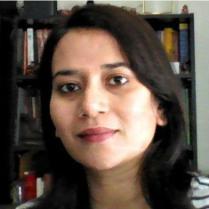
Urmila Patil, Ph. D. | Instructor in Yoga Studies, Loyola Marymount University
Urmila Patil teaches Sanskrit, Bhagavadgita, and the Yoga Sutras (along with Prof. Chris Chapple) in the Yoga Studies Program at Loyola Marymount University. She did her MA in Sanskrit and Vedanta Philosophy from Mumbai University. She completed her doctorate from the University of Texas at Austin and worked as a post-graduate fellow at University of Pennsylvania. Her research interests include Indic philosophy, Sanskrit intellectual tradition, Hindu legal tradition, and early-modern social identities. She also teaches Contemporary Hinduism at UCLA.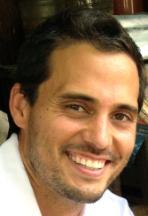
Christopher Miller, CPA, MA, Ph. D. Candidate | University of California, Davis
Christopher Miller has master’s degrees in Comparative Theology (Loyola Marymount University) and Religious Studies (UC Davis) and is a PhD Candidate in the interdisciplinary Graduate Group for the Study of Religion at the University of California, Davis where his research is focused upon transnational modern yoga. Christopher served as an assistant editor for the Journal of the American Academy of Religion (JAAR), as guest editor for the International Journal of Dharma Studies (IJDS), and currently sits on the steering committee for the Dharma Academy of North America (DANAM). He has presented his research at a number of conferences internationally and has several forthcoming publications in edited volumes including chapters with Oxford University Press and Springer. Christopher has edited a special issue titled “Contemplative Studies in Dharma Traditions” for IJDS and is also co-editor of the forthcoming volume Beacons of Dharma (Lexington Books).
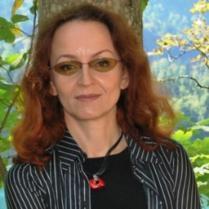
Marzenna Jakubczak, Ph. D. | Pedagogical University of Cracow, Poland
Marzenna Jakubczak is Professor of Philosophy at Department of Philosophy and Sociology, Pedagogical University of Cracow, Poland. She received her PhD in 1998 from Jagiellonian University, specializing in Indian philosophy. Her research interests focus on the self and mind discussed in terms of classical Indian philosophy, especially in Sāṃkhya-Yoga tradition, Buddhism and contemporary Western philosophy, e.g. The Sense of 'I' (ahaṃkāra). Conceptualizing Subjectivity in Indian Philosophy, Kraków 2013; “Why Didn’t Siddhartha Gautama Become a Sāṃkhya Philosopher, After All?” in I. Kuznetsova, J. Ganeri, and Chakravarthi Ram-Prasad, eds., Hindu and Buddhist Ideas in Dialogue. Self and No-Self, Ashgate 2012; “What is the Sense of Ego-Maker in Classical Samkhya and Yoga?,” in Girishwar Misra, ed., Psychology & Psychoanalysis, Munshiram Monoharlal 2013. She has authored and co-authored numerous papers and several volumes on various topics including comparative philosophy and religion, as well as Buddhist, Hindu, and cross-cultural aesthetics: e.g. Aesthetics of the Four Elements, Tilia 2001. Since 2010 she has been editor-in-chief of a peer-reviewed open access journal Argument: Biannual Philosophical Journal (www.argument-journal.eu).
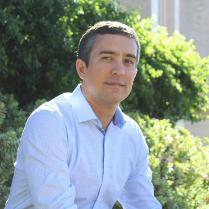
Geoff Ashton, Ph. D. | University of San Francisco
Geoff Ashton recently joined the Department of Philosophy at the University of San Francisco from the University of Colorado at Colorado Springs, where he also held an appointment as Assistant Professor of Asian Philosophy. Geoff Ashton has studied Sanskrit, Thai, and Spanish, and conducted research at numerous institutions of higher learning abroad (twice as a Fulbright scholar), including Jawaharlal Nehru University (Delhi, India), Deccan College (Pune, India), the Jñāna-Pravaha Institute (Varanasi, India), Chiang Mai University (Chiang Mai, Thailand), Chulalongkorn University (Bangkok, Thailand), and La Universidad Autónoma de Madrid (Madrid, Spain). He has authored numerous articles, book chapters, and essays on Indian Philosophy, Buddhist Philosophy, Philosophy of Religion, Comparative Ethics, and Comparative Aesthetics. He has three main research agendas: Indian Philosophy of Religion, Buddhist Philosophy and Comparative Ethics, and Comparative Aesthetics. He is currently revising a manuscript titled, Whose Suffering? Whose Freedom? A Phenomenological Reconstruction of the Philosophy of the Sāṃkhya Kārikā (under review). Interpreting Classical Sāṃkhya philosophy through the lens of José Ortega y Gasset’s existential phenomenology, this book attempts to shed new light on the interrelation between the traditional Indian concepts of suffering, freedom, selfhood, and action.

Ana Funes, Ph. D. | Assistant Professor of Philosophy, Eastern Connecticut State University
Ana Funes is Assistant Professor of Philosophy at Eastern Connecticut State University. Her research involves the hermeneutical and phenomenological analysis of the notion of bodily self-awareness with focus on Yoga philosophies and French Phenomenology. She has published various articles on topics related to Yoga philosophy and is currently editing a multidisciplinary anthology of papers on Patañjali's Yogasūtra.
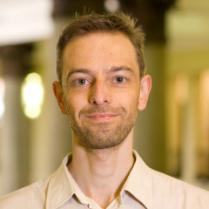
Mikel Burley, Ph. D. | Associate Professor of Religion and Philosophy at the University of Leeds, UK
Mikel Burley is Associate Professor of Religion and Philosophy at the University of Leeds, UK. His books include Classical Samkhya and Yoga: An Indian Metaphysics of Experience (Routledge, 2007) and Rebirth and the Stream of Life: A Philosophical Study of Reincarnation, Karma and Ethics (Bloomsbury, 2016).
Al Collins, Ph. D.
Alfred Collins is a clinical psychologist with a second Ph.D. in Indic Studies (University of Texas at Austin). He completed his doctoral work with Edgar Polome and S. M. Katre after spending a year as a Fullbright fellow at Madras University studying with Drs. V. Raghavan and T.M.P. Mahadevan. He is on the adjunct faculty at the Pacifica Graduate Institute and was formerly core faculty at the California Institute of Integral Studies. His research interests and record of publications and presentations are in the areas of Indian psychology and psychoanalysis, both Freudian and Jungian, as well as cultural and film studies. Recently he guest edited (with Jungian Analyst Elaine Molchanov) a volume of Spring Journal titled Jung and India.